


Production introduction
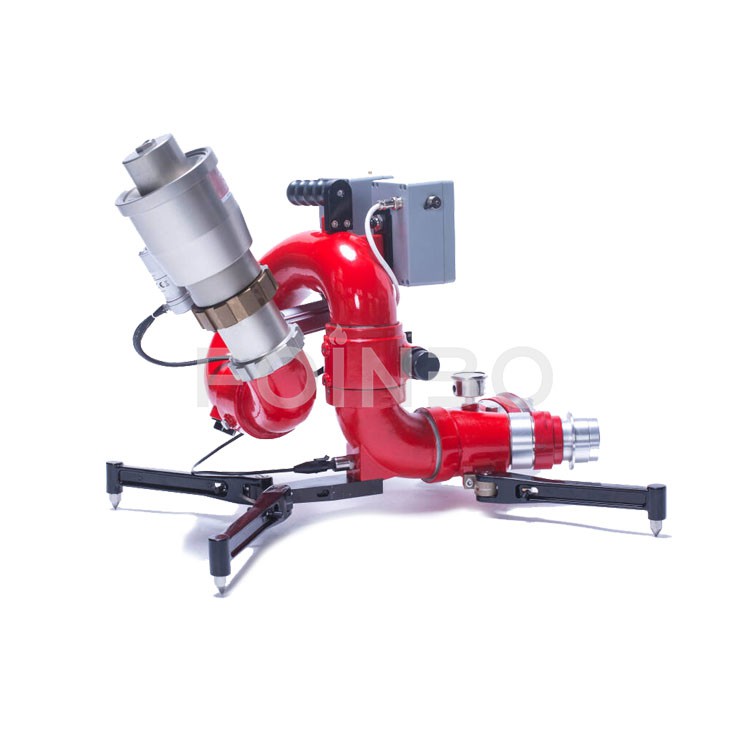
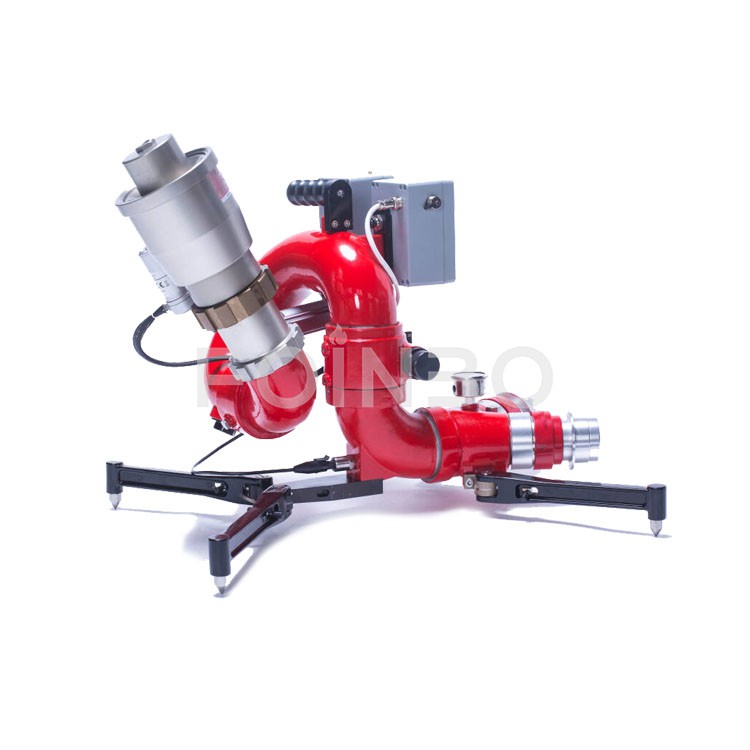
The foinbo® RC Portable Monitors For Firefighting are advanced remote-controlled fire suppression devices built to address large-scale flammable liquid fires in high-risk environments such as petrochemical refineries, industrial storage terminals, and chemical processing plants. Prioritizing firefighter safety and operational flexibility, these RC Portable Monitors For Firefighting enable long-distance fire control, keeping personnel away from extreme heat, toxic smoke, and potential fuel splashes that pose risks during close-range operations.
Constructed with high-tensile aluminium alloy, the RC Portable Monitors For Firefighting strike a balance between sturdiness and mobility-weighing 38kg (without the stabilizing base) for easy relocation via fire trucks, utility carts, or even manual handling by two team members. They operate within a pressure range of 0.6–1.0MPa, delivering a variable flow rate from 800 to 2200 LPM to match different fire sizes. With a low-expansion foam ratio of ≥5 times and a maximum spray distance of 38 meters, these monitors can quickly blanket large fire surfaces. The remote control system supports smooth 360° horizontal swivel and -20° to +65° vertical tilt, allowing precise targeting of fire hotspots, even in areas blocked by equipment or structural obstacles.
Compatible with a wide range of foam concentrates-including AFFF, alcohol-resistant AR-AFFF, and fluoroprotein variants-the RC Portable Monitors For Firefighting connect to firefighting systems via 4″/DN100 inlets, with optional adapters for Storz, NH, or GOST couplings. Whether used as a primary suppression tool for tank fires or a backup for fixed systems, these monitors ensure consistent performance. For firefighting teams needing reliable, long-range solutions to tackle intense liquid fires, the RC Portable Monitors For Firefighting are a vital asset-combining remote safety, adaptable performance, and easy deployment to protect both personnel and critical infrastructure.
Products Parameters
|
Model Number |
Flow Rate |
W.Pressure |
Water Max.Reach |
Max. Fog Angle |
Inlet Size |
|
WMKDY 8/50W |
3000 L/Min |
8 bar |
65 meters |
90° |
2*DN65 |
Products Description


FAQ
Q: Can RC Portable Monitors For Firefighting be integrated with automated fire detection systems?
A: Yes, they can be linked to automated detection systems (such as heat or flame detectors) via a control module. When a fire is detected, the system can automatically trigger the monitor to pre-set angles and flow rates, reducing response time-though manual remote control is still recommended for fine-tuning.
Q: What is the maximum distance the remote control can operate from the monitor?
A: The remote control has an effective range of up to 50 meters in open, unobstructed areas. In environments with heavy industrial equipment or thick smoke, the range may decrease to 30–35 meters, so it's best to position the operator within line of sight of the monitor.
Q: How to secure RC Portable Monitors For Firefighting on uneven terrain during deployment?
A: Use the optional weighted base (15kg) filled with water or sand to stabilize the monitor on sloped or rough ground. For extreme unevenness, adjust the monitor's adjustable feet to level the unit before activating the spray-unstable positioning can cause the monitor to shift during operation.
Q: Are there training requirements for personnel to operate these portable monitors?
A: Basic training is recommended, covering remote control pairing, flow rate adjustment, and emergency shutdown procedures. Most manufacturers offer 2-hour hands-on training sessions, which include simulated fire scenarios to help operators master targeting and pressure optimization.
Q: Can the monitor's spray pattern be adjusted from a straight stream to a wide fog?
A: No, these monitors are designed exclusively for low-expansion foam application with a straight stream pattern, which is optimal for smothering liquid fires. For fog patterns (used for cooling or dust suppression), a separate fog nozzle attachment is required-though this will reduce foam expansion efficiency.