

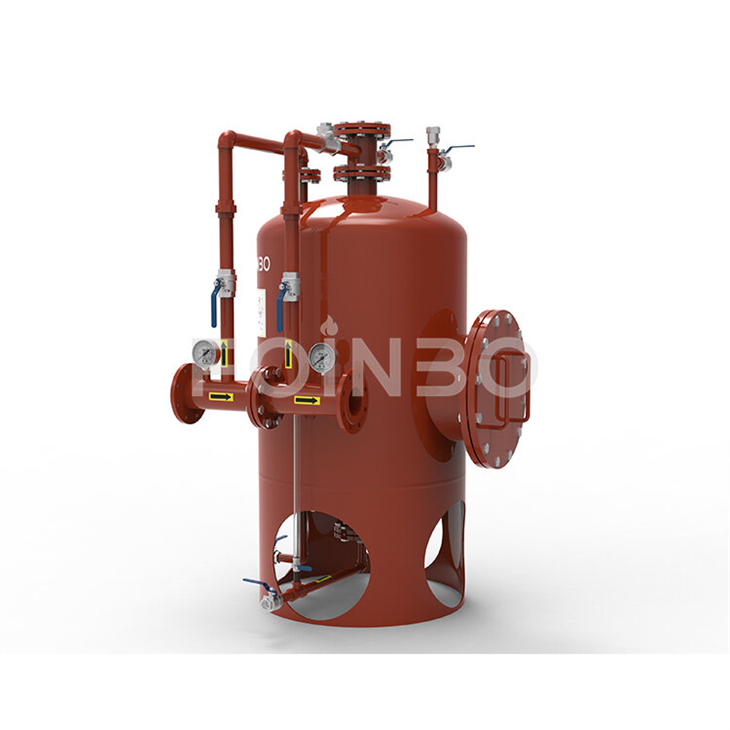


Production introduction
Constructed with durability in mind, the Fire Foam Tank features a robust carbon - steel body. This material choice ensures the tank can withstand the rigors of regular use and exposure to various environmental conditions. The bladder, crafted from either rubber or PVC, acts as a protective inner layer, safeguarding the integrity of the foam concentrate. This separation helps prevent degradation and contamination, ensuring the foam remains effective over time.
The Fire Foam Tank is equipped with high - quality components. The proportioner, made from SS304 stainless steel, guarantees accurate mixing of the foam concentrate with water. This precision is vital for achieving the optimal foam ratio, which can be set at either 3% or 6%, depending on the fire type. The ball valve and safety valve, available in both carbon - steel (standard) and SS304 stainless - steel (optional) variants, ensure secure and reliable operation. The piping system, similarly offered in both material options, facilitates smooth and efficient flow of the foam - water mixture.
Available in a variety of models, from the compact PHYML - 100 with a 100 - liter capacity to the large - scale PHYML - 5500 holding 5500 liters, the Fire Foam Tank caters to diverse firefighting needs. Each model operates within a working pressure range of 0.8 - 1.2 Mpa. The flow - rate range varies by model, with smaller units like the PHYML - 100 - 750 offering 4 - 24 LPS and larger ones such as the PHYML - 3000 - 5500 providing 12 - 48 LPS. This flexibility allows for customization based on the scale and nature of potential fires.
The surface of the Fire Foam Tank is finished with a protective paint coating. This not only enhances the tank's visual appeal but also provides an extra layer of defense against corrosion and other environmental hazards.
Products Parameters
|
Model |
Capacity |
Description |
Working pressure |
Ratio |
Flow Rate Range |
|
PHYML-100 |
100 L |
Vertical |
0.8-1.2 Mpa |
3% or 6% |
4-24 LPS |
|
PHYML-200 |
200 L |
Vertical |
0.8-1.2 Mpa |
3% or 6% |
4-24 LPS |
|
PHYML-300 |
300 L |
Vertical |
0.8-1.2 Mpa |
3% or 6% |
4-24 LPS |
|
PHYML-500 |
500 L |
Vertical |
0.8-1.2 Mpa |
3% or 6% |
4-24 LPS |
|
PHYML-750 |
750 L |
Vertical |
0.8-1.2 Mpa |
3% or 6% |
4-24 LPS |
|
PHYML-1000 |
1000 L |
Vertical |
0.8-1.2 Mpa |
3% or 6% |
8-32 LPS |
|
PHYML-1500 |
1500 L |
Vertical |
0.8-1.2 Mpa |
3% or 6% |
8-32 LPS |
|
PHYML-2000 |
2000 L |
Vertical |
0.8-1.2 Mpa |
3% or 6% |
8-32 LPS |
|
PHYML-2500 |
2500 L |
Vertical |
0.8-1.2 Mpa |
3% or 6% |
8-32 LPS |
|
PHYML-3000 |
3000 L |
Vertical |
0.8-1.2 Mpa |
3% or 6% |
12-48 LPS |
|
PHYML-3500 |
3500 L |
Vertical |
0.8-1.2 Mpa |
3% or 6% |
12-48 LPS |
|
PHYML-4000 |
4000 L |
Vertical |
0.8-1.2 Mpa |
3% or 6% |
12-48 LPS |
|
PHYML-4500 |
4500 L |
Vertical |
0.8-1.2 Mpa |
3% or 6% |
12-48 LPS |
|
PHYML-5000 |
5000 L |
Vertical |
0.8-1.2 Mpa |
3% or 6% |
12-48 LPS |
|
PHYML-5500 |
5500 L |
Vertical |
0.8-1.2 Mpa |
3% or 6% |
12-48 LPS |
Products Features
| Body Material |
Carbon Steel; |
| Bladder Material |
Rubber / PVC |
| Proportioner |
SS304 Stainless Steel; |
| Ball Valve |
Carbon Steel is standard,SS304 Stainless Steel optional; |
| Safety Valve |
Carbon Steel is standard,SS304 Stainless Steel optional ; |
| Piping System |
Carbon Steel is standard,SS304 Stainless Steel optional ; |
|
Flange Standard of Proportioner |
ANSI / BS4504 / GB; |
| Surface Finishing | Painting |
Products Description


FAQ
1.Q: How does temperature affect the foam concentrate in the Fire Foam Tank?
A: Extreme temperatures can impact the foam concentrate's performance. In cold conditions, the concentrate may thicken, affecting its flow and mixing properties. In high heat, it could degrade. The tank's design helps mitigate these effects, but in very harsh environments, additional insulation or temperature - control measures might be needed to maintain the foam's effectiveness.
2.Q: Can the Fire Foam Tank be relocated easily?
3.Q: How does the choice of bladder material impact the tank's lifespan?
4.Q: What safety features are built into the Fire Foam Tank?
5.Q: Can the Fire Foam Tank be used in conjunction with other firefighting agents?