

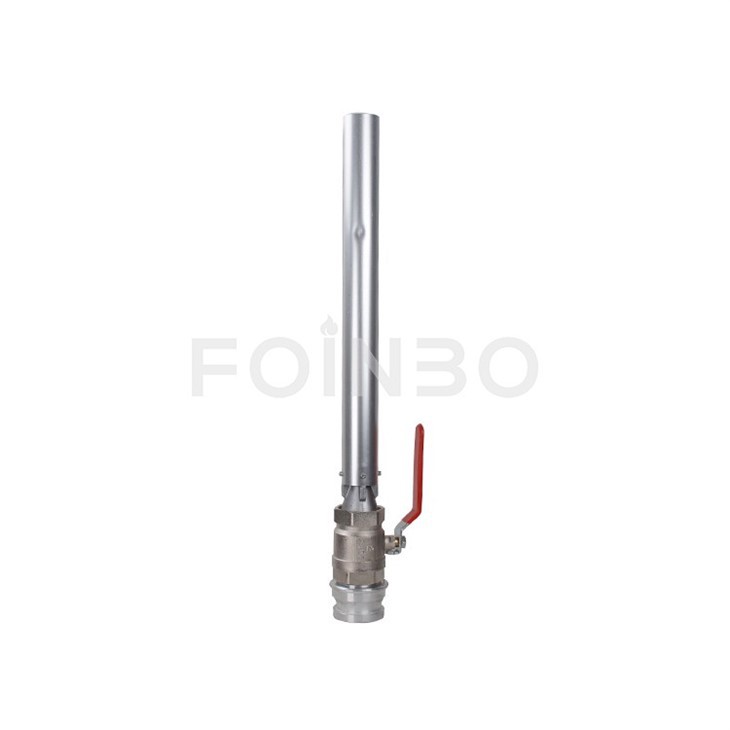
Production introduction
Designed for low-expansion foam deployment, Foam Nozzle Firefighting units operate at 6 bar pressure, pushing out 240 liters per minute to blanket flames efficiently. Their straight-stream jet pattern cuts through smoke and heat, ensuring foam reaches the fire's core-key for smothering petroleum, diesel, or solvent blazes before they spread. With inlet sizes in 2″/DN50 and 2.5″/DN65, they sync seamlessly with hoses using NH, INST, Storz, GOST, or Machino couplings, adapting to diverse system setups without hassle.
What sets Foam Nozzle Firefighting apart is its focus on usability: the aluminium build resists corrosion from foam concentrates, while the fixed jet design minimizes training needs for operators. Whether deployed from fire trucks, portable rigs, or fixed installations, these nozzles deliver consistent foam expansion (≥5 times), forming a dense barrier that starves fires of oxygen and prevents re-ignition.
For teams needing reliable, adaptable tools to counter liquid fires, Foam Nozzle Firefighting proves indispensable-combining precision, durability, and versatility in every use.
Products Parameters
|
Model |
QZ3.5/5(50mm,2'') |
|
Connection Norminal Diamter |
DN50 |
|
Rated Spray Pressure |
0.35MPa |
|
Rated Flux |
5L/S |
|
Spray Distance |
>25m |
Products Description


FAQ
Q: How does the nozzle's material hold up against harsh foam chemicals?
A: The hard-anodized aluminium alloy is treated to resist degradation from foam concentrates, including fluoroprotein and AFFF types. Regular rinsing after use helps maintain its integrity over time.
Q: Can the flow rate be adjusted for smaller fires?
A: The 240 LPM rate is fixed, but operators can regulate pressure (within 6 bar limits) to reduce output for smaller blazes. Pairing with a flow-control valve in the hose line offers finer adjustments.
Q: What's the best way to clear clogs in the nozzle?
A: Use a soft-bristled brush to dislodge debris from the jet opening. Avoid metal tools that might scratch the nozzle's interior, as this can disrupt the foam pattern.
Q: Does the straight-stream design work on irregularly shaped fire sources?
A: While optimized for direct targeting, operators can sweep the stream across uneven surfaces (like tank edges or spill edges) to ensure full foam coverage. Practice in training scenarios improves precision.
Q: How compatible is it with older firefighting equipment?
A: The multi-coupling options (NH, Storz, etc.) make it adaptable to most legacy systems. Check hose thread sizes against the nozzle's inlet to ensure a tight fit-adapters are available if needed.