

As a supplier of automatic cannons, I've witnessed firsthand the intricate dance of these powerful weapons within the broader military ecosystem. Automatic cannons are not standalone entities; they are integral components that interact with a wide array of military equipment, each interaction serving a specific purpose and contributing to the overall effectiveness of military operations.
Integration with Surveillance and Targeting Systems
One of the primary ways an automatic cannon interacts with other military equipment is through integration with surveillance and targeting systems. Modern surveillance equipment, such as radar, electro - optical sensors, and infrared cameras, plays a crucial role in detecting and tracking potential targets. These systems can identify threats at long ranges, providing the automatic cannon with the necessary data to engage effectively.
For example, a naval automatic cannon on a warship might be linked to the ship's radar system. The radar can detect incoming enemy aircraft, missiles, or small boats, and then relay the target's position, speed, and trajectory to the automatic cannon's fire control system. The fire control system, in turn, uses this information to calculate the optimal firing solution, adjusting the cannon's elevation, azimuth, and rate of fire. This seamless integration ensures that the automatic cannon can respond quickly and accurately to threats, even in high - stress combat situations.
Similarly, on land - based military vehicles, automatic cannons are often paired with electro - optical targeting systems. These systems can zoom in on targets, identify them, and provide real - time feedback to the cannon operator. This allows for precise targeting, reducing the risk of collateral damage and increasing the chances of a successful engagement.
Compatibility with Ammunition Handling Systems
Another critical interaction is between the automatic cannon and ammunition handling systems. An efficient ammunition handling system is essential for ensuring that the cannon can maintain a high rate of fire. These systems are designed to store, feed, and load ammunition into the cannon in a timely and reliable manner.
In a naval context, large - caliber automatic cannons may be connected to complex ammunition magazines and conveyor systems. These systems can hold a large quantity of ammunition and can quickly transfer it to the cannon's breech. For example, a close - in weapon system (CIWS) on a warship needs to be able to fire hundreds of rounds per minute to defend against incoming missiles. The ammunition handling system ensures that the cannon has a continuous supply of ammunition, allowing it to engage multiple threats in rapid succession.
On armored vehicles, automatic cannons are often integrated with on - board ammunition storage and loading mechanisms. These systems can be automated, reducing the workload on the crew. They can also be designed to handle different types of ammunition, such as high - explosive, armor - piercing, and tracer rounds. This flexibility allows the vehicle to adapt to different combat scenarios, depending on the type of target it faces.
Interaction with Communication and Command Systems
Automatic cannons also interact closely with communication and command systems. In a military operation, information needs to flow freely between different units and levels of command. The automatic cannon is no exception.

At the tactical level, the cannon's crew needs to be able to communicate with other elements of the military unit. For example, in a combined - arms operation, the crew of a tank with an automatic cannon needs to coordinate with infantry units, artillery, and other armored vehicles. They use radio communication systems to share information about the location of targets, the status of the cannon, and the overall situation on the battlefield.
At the strategic level, automatic cannons are part of a larger military network. Commanders can use communication systems to direct the deployment and use of these weapons. They can receive reports on the effectiveness of the cannons in different areas and make decisions about re - allocation of resources. For example, if a particular sector is facing a high - intensity threat, commanders can order more automatic cannons to be deployed to that area.
Synergy with Electronic Warfare Equipment
In modern warfare, electronic warfare has become an increasingly important aspect. Automatic cannons can interact with electronic warfare equipment to enhance their effectiveness and protect themselves from enemy counter - measures.
Electronic warfare equipment can be used to jam enemy radar and communication systems, reducing the enemy's ability to detect and target the automatic cannon. At the same time, the cannon can be integrated with electronic counter - measure systems to protect itself from incoming guided missiles. For example, some automatic cannons are equipped with anti - missile decoys that can be launched to divert incoming missiles away from the cannon.
On the offensive side, electronic warfare can also be used to support the automatic cannon's operations. By disrupting enemy communication and sensor systems, electronic warfare can create opportunities for the cannon to engage targets more effectively. For example, if the enemy's radar is jammed, their ability to detect and track the approaching automatic cannon - equipped vehicle or vessel is severely limited, giving the cannon a better chance of a successful surprise attack.
Interplay with Air Defense Networks
In air defense scenarios, automatic cannons are an integral part of a larger air defense network. They work in conjunction with other air defense systems, such as surface - to - air missiles, to provide multi - layer defense against enemy aircraft and missiles.
Automatic cannons are often used as a last - line of defense. They are effective against low - flying targets, such as helicopters and unmanned aerial vehicles (UAVs). When an enemy aircraft or missile penetrates the outer layers of the air defense network, the automatic cannon can engage it at close range. For example, a short - range air defense system (SHORAD) may include automatic cannons along with missile launchers. The missiles can engage targets at longer ranges, while the automatic cannons can provide a rapid - fire, close - in defense.
The air defense network also uses communication and coordination systems to ensure that all elements work together seamlessly. For example, if a radar system detects an incoming target, it can send information to both the missile launchers and the automatic cannons. The system can then determine the most appropriate weapon to use based on the target's range, speed, and type, and coordinate the engagement to maximize the chances of a successful interception.
The Role of Automatic Cannons in Combined - Arms Operations
In combined - arms operations, automatic cannons interact with a wide variety of military equipment from different branches of the military. For example, in a joint land - sea - air operation, an automatic cannon on a naval vessel can provide fire support to ground troops. It can engage enemy positions on the shore, clearing the way for amphibious landings.
On land, automatic cannons on armored vehicles can work in tandem with infantry units. The cannon can provide covering fire for the infantry as they advance, suppressing enemy positions and allowing the infantry to move safely. At the same time, the infantry can provide close - in security for the armored vehicle, protecting it from enemy anti - tank teams.
In an air - ground operation, automatic cannons on attack helicopters can support ground forces by engaging enemy vehicles and personnel. The helicopters can use their mobility and firepower to quickly respond to emerging threats on the battlefield, working in coordination with ground - based military equipment.
Our Products: Automatic Fire Monitor, Automatic Fire Fighting Water Cannon, and Fire Monitor Automatic System
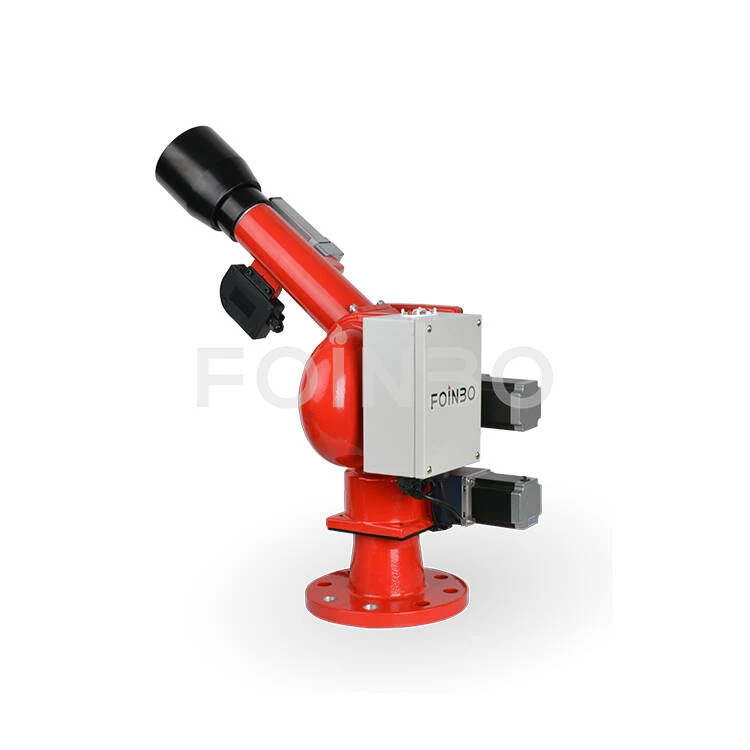
As a leading supplier of automatic cannons, we offer a range of high - quality products that are designed to interact seamlessly with other military equipment. Our Automatic Fire Monitor is a state - of - the - art system that can be integrated with various surveillance and targeting systems. It provides accurate and reliable fire, making it an ideal choice for both naval and land - based applications.
Our Automatic Fire Fighting Water Cannon is not only useful for fire - fighting purposes but can also be adapted for military applications. It is compatible with different ammunition handling systems, ensuring a continuous supply of water or other fire - fighting agents.
The Fire Monitor Automatic System is a comprehensive solution that includes advanced communication and command features. It allows for easy integration into existing military networks, enabling efficient coordination with other military equipment.
If you are in the market for automatic cannons or related systems, we invite you to contact us for a detailed discussion about your specific needs. Our team of experts is ready to provide you with the best solutions and support to meet your military requirements. Whether you are looking to upgrade your existing equipment or build a new military system from scratch, we can offer you the products and expertise you need.
References
- Jane's Weapon Systems. A comprehensive reference on military weapons and equipment, including automatic cannons and their associated systems.
- Military Technology Journal. Articles and research on the latest developments in military technology, including the integration of automatic cannons with other equipment.
- Naval Institute Proceedings. Publications on naval warfare, which often cover the use and interaction of automatic cannons on warships.