

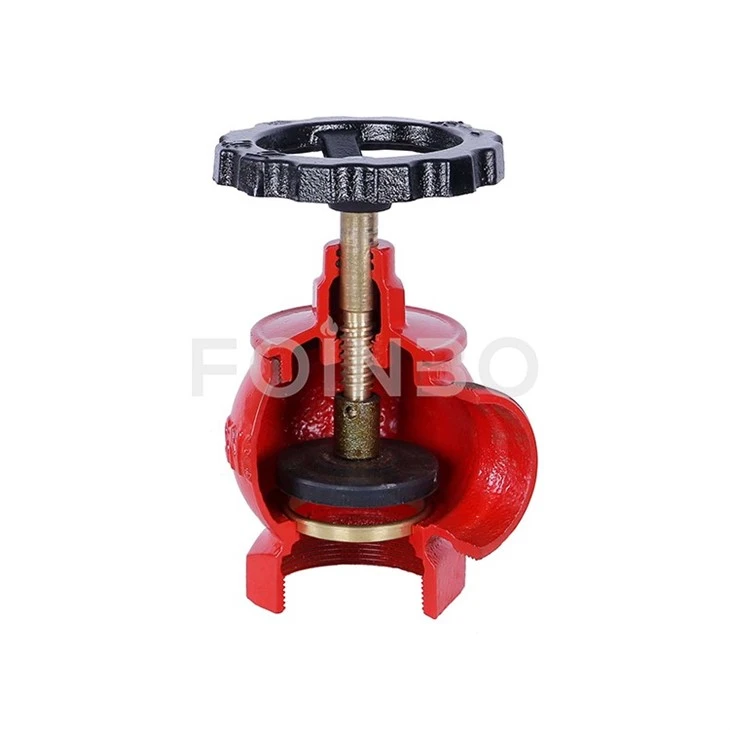
As a seasoned supplier in the field of landing valves, I've witnessed firsthand the critical role these components play in various applications. Landing valves are essential elements in fire protection systems, water distribution networks, and industrial settings. In this blog post, I'll delve into the main functions of a landing valve, shedding light on its significance and why it's a must - have for many operations.

1. Flow Control
One of the primary functions of a landing valve is to regulate the flow of fluids, typically water, within a system. In fire protection systems, for example, precise flow control is crucial. When a fire breaks out, firefighters need to be able to adjust the amount of water flowing through the hoses to effectively combat the blaze. A landing valve allows them to do just that. By turning the valve handle, they can increase or decrease the water flow rate according to the size and intensity of the fire.
In industrial settings, where water is used for processes such as cooling or cleaning, landing valves ensure that the right amount of water is delivered to the specific areas. This not only optimizes the efficiency of the processes but also helps in conserving water resources. For instance, in a manufacturing plant, different production lines may require different water flow rates. Landing valves installed at strategic points can be adjusted to meet these varying demands.
2. Isolation
Another vital function of a landing valve is isolation. In a large water distribution network or a complex fire protection system, it's often necessary to isolate specific sections for maintenance, repairs, or in case of emergencies. A landing valve can be closed to stop the flow of water to a particular area, preventing water damage and allowing technicians to work safely.
In a high - rise building's fire protection system, if there is a leak in a section of the piping, the landing valve serving that area can be shut off. This isolates the problem area, minimizing water loss and preventing further damage to the building's structure and contents. Similarly, in a municipal water supply system, when a section of the pipeline needs to be repaired, landing valves can be used to isolate the affected part, ensuring that the rest of the network can continue to function normally.
3. Pressure Regulation
Landing valves also play a key role in pressure regulation. In a fire protection system, water needs to be delivered at the right pressure to reach the upper floors of a building or to provide sufficient force to extinguish a fire. A landing valve can be adjusted to maintain the appropriate pressure within the system.
In a water distribution network, different areas may require different water pressures. For example, areas at higher elevations may need higher pressure to ensure an adequate water supply. Landing valves can be used to regulate the pressure at different points in the network, ensuring that all consumers receive water at the required pressure. If the pressure is too high, it can cause damage to the pipes and fixtures; if it's too low, it may not be sufficient for the intended use.
4. Connection Point
Landing valves serve as connection points for hoses, sprinkler systems, and other firefighting equipment. In a fire protection system, firefighters can quickly connect their hoses to the landing valve to access the water supply. This allows for a rapid response in case of a fire emergency.
In industrial applications, landing valves can be used to connect various equipment that requires a water supply. For example, in a mining operation, water - powered equipment such as drills and crushers can be connected to the landing valves to ensure a continuous supply of water for cooling and dust suppression.
Different Types of Landing Valves and Their Functions
There are several types of landing valves available in the market, each with its own specific functions and applications.
Coupling Landing Valve
The Coupling Landing Valve is designed for easy connection and disconnection of hoses. It features a coupling mechanism that allows firefighters or operators to quickly attach and detach hoses without the need for complex tools. This type of valve is commonly used in fire protection systems, especially in areas where a rapid response is required.
Fire Hydrant Landing Valve
The Fire Hydrant Landing Valve is an integral part of a fire hydrant system. It is designed to control the flow of water from the hydrant to the hoses. These valves are typically installed in buildings, industrial facilities, and public areas to provide a reliable water source for firefighting. They are built to withstand high pressures and are often made of durable materials such as cast iron or stainless steel.
Wet Barrel Hydrant Valve
The Wet Barrel Hydrant Valve is used in wet barrel hydrants, which are commonly found in areas with a relatively mild climate. This type of valve remains filled with water year - round, ensuring a quick and reliable water supply in case of a fire. The wet barrel hydrant valve is designed to prevent freezing and to provide smooth operation even in cold weather conditions.
Importance of Quality Landing Valves
When it comes to landing valves, quality is of utmost importance. A high - quality landing valve ensures reliable performance, durability, and safety. Inferior valves may leak, malfunction, or fail to operate under pressure, which can have serious consequences in a fire emergency or other critical situations.
As a landing valve supplier, we understand the importance of providing our customers with top - notch products. Our landing valves are manufactured using the latest technology and high - quality materials. We conduct rigorous quality control tests to ensure that each valve meets or exceeds industry standards.
Conclusion
In conclusion, landing valves are essential components in fire protection systems, water distribution networks, and industrial applications. Their main functions of flow control, isolation, pressure regulation, and serving as connection points make them indispensable for ensuring the safety and efficiency of these systems.
Whether you are a building owner, a facility manager, or a firefighting professional, choosing the right landing valve is crucial. If you are in the market for high - quality landing valves, we invite you to contact us for procurement and further discussions. Our team of experts is ready to assist you in selecting the most suitable landing valves for your specific needs.
References
- National Fire Protection Association (NFPA). NFPA 13: Standard for the Installation of Sprinkler Systems.
- American Water Works Association (AWWA). AWWA C509: Standard for Butterfly Valves for Waterworks Service.
- International Building Code (IBC). IBC 2021: Provisions for Fire Protection Systems in Buildings.