

Hey there! As an OS&Y (Outside Screw and Yoke) gate valve supplier, I often get asked about the requirements for using these valves in cryogenic applications. Cryogenic applications involve extremely low temperatures, usually below -150°C (-238°F), and they present unique challenges for valve performance. In this blog, I'll break down the key requirements you need to consider when using an OS&Y gate valve in such cold environments.
Material Selection
The first and most crucial aspect is the choice of materials. At cryogenic temperatures, regular materials can become brittle and lose their mechanical properties. That's why we need to select materials that can withstand these extreme cold conditions.
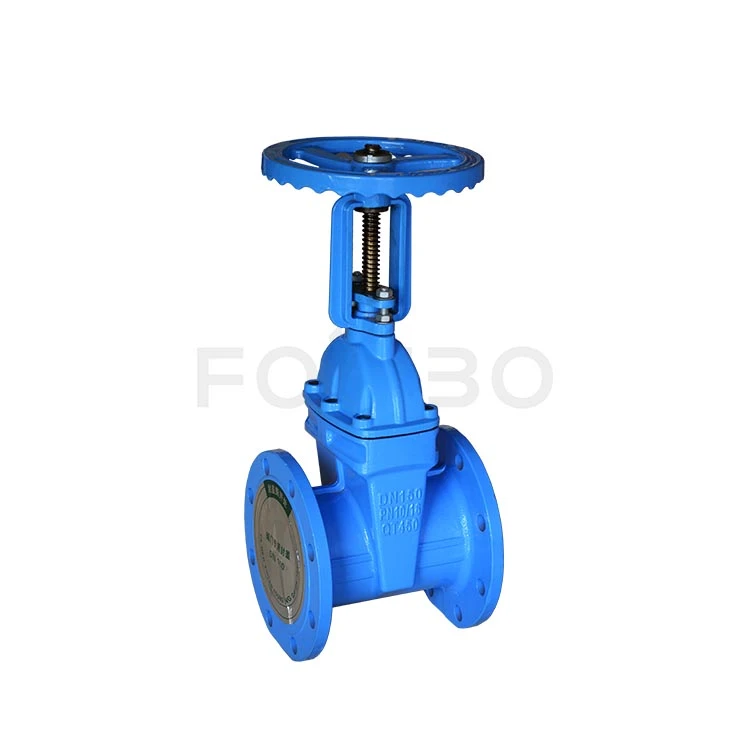

- Body and Bonnet Materials: Stainless steel grades like 304L and 316L are popular choices. These materials have good ductility and corrosion resistance at low temperatures. They can maintain their strength and integrity, preventing cracks and leaks that could be disastrous in a cryogenic system.
- Seat and Disc Materials: For the seats and discs, materials such as PTFE (Polytetrafluoroethylene) or other fluoropolymers are often used. PTFE has excellent low - temperature flexibility and chemical resistance. It can form a tight seal even in the coldest of environments, ensuring zero leakage of cryogenic fluids.
Design Considerations
The design of the OS&Y gate valve also plays a vital role in cryogenic applications.
- Expansion and Contraction: Cryogenic fluids cause significant thermal contraction. The valve design must account for this. The valve should have enough clearance to allow for contraction without binding or causing excessive stress on the components. A well - designed valve will have a floating disc or seat arrangement that can adjust to the dimensional changes due to temperature variations.
- Insulation: Insulating the valve is essential to prevent heat transfer from the surrounding environment. This not only helps in maintaining the low temperature of the cryogenic fluid but also protects the valve components from damage due to thermal shock. Insulation materials like polyurethane foam or fiberglass can be used to wrap the valve body and bonnet.
Sealing Performance
In cryogenic applications, a perfect seal is non - negotiable. Even a small leak can lead to a loss of valuable cryogenic fluids and pose safety risks.
- Primary Sealing: The primary sealing mechanism of the OS&Y gate valve should be able to maintain its integrity at low temperatures. As mentioned earlier, using materials like PTFE for the seats and discs helps in achieving a tight seal. The valve should also be designed to apply sufficient force on the sealing surfaces to ensure a leak - free operation.
- Stem Sealing: The stem of the valve is another area where sealing is critical. A gland packing system is commonly used to seal the stem. The packing material should be selected carefully to withstand the cold temperatures. Graphite - based packing materials are often used as they have good low - temperature performance and can provide a reliable seal around the stem.
Operational Requirements
Cryogenic applications also have specific operational requirements for the OS&Y gate valve.
- Actuation: Manual actuation of the valve can be difficult in cryogenic environments due to the cold temperatures making the valve components stiff. In such cases, pneumatic or electric actuators are preferred. These actuators can provide the necessary force to open and close the valve smoothly, even in extremely cold conditions.
- Monitoring and Maintenance: Regular monitoring of the valve's performance is crucial. This includes checking for leaks, valve position, and the condition of the sealing components. Maintenance should be carried out at appropriate intervals to replace worn - out parts and ensure the valve continues to operate safely and efficiently.
Safety Features
Safety is always a top priority in cryogenic applications.
- Pressure Relief: The valve should be equipped with a pressure relief device. Cryogenic fluids can expand rapidly if they are heated, which can cause a significant increase in pressure. A pressure relief valve can prevent over - pressurization of the system, protecting the valve and the entire cryogenic installation.
- Emergency Shutdown: In case of an emergency, the valve should be able to close quickly. This can be achieved through an emergency shutdown system that is integrated with the valve's actuation mechanism.
Now, if you're in the market for OS&Y gate valves for cryogenic applications, we've got you covered. We offer a wide range of high - quality OS&Y gate valves that meet all the requirements mentioned above. Whether you need a Gate Valve Fire Fighting, a Ductile Gate Valve, or a Fire Gate Valve Flanged, we have the right product for you.
If you're interested in learning more about our products or want to discuss your specific requirements, don't hesitate to reach out. We're here to help you make the best choice for your cryogenic application. Let's start a conversation and find the perfect OS&Y gate valve solution for you.
References
- ASME B16.34 - Valves - Flanged, Threaded, and Welding End
- API 600 - Steel Gate Valves - Flanged and Butt - Welding Ends for Petroleum, Natural Gas, and Related Industries
- ISO 15761 - Industrial valves - Gate, globe and check valves for cryogenic service