


Production introduction
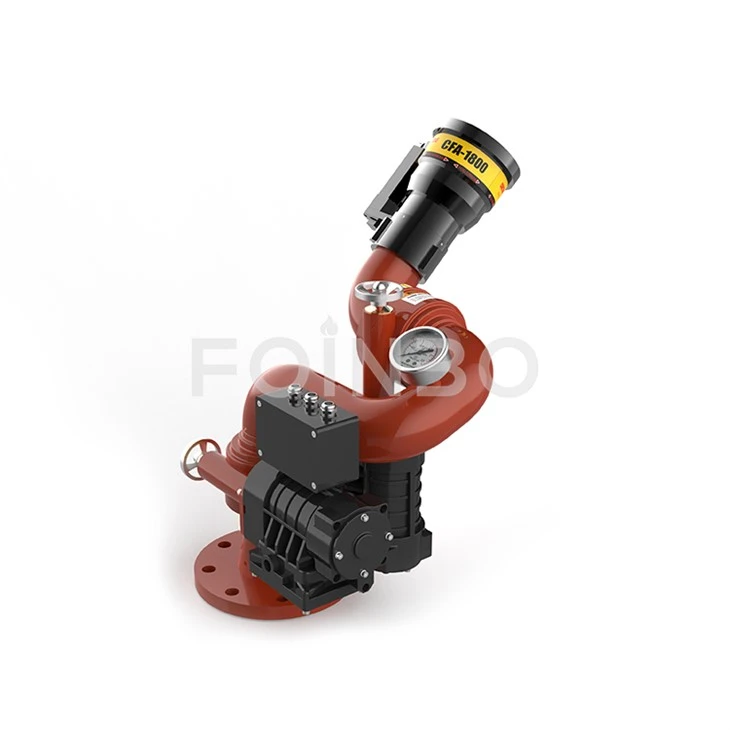
foinbo® Electric Water Cannon is a high-powered water jet system that operates using an electric motor. It is typically used for firefighting, riot control, industrial cleaning, and water projection in various applications. Unlike traditional water cannons that may rely on hydraulic or combustion-driven pumps, electric water cannons use an electric pump or actuator to generate and direct a strong stream of water
Products parameters
|
Model Number |
Flow Rate |
W.Pressure |
Water Max.Reach |
Max.Fog Angle |
Inlet Flange |
Power |
|
PSKD 8/20W |
1200 L/Min |
8 bar |
50 meters |
120° |
4 inch/DN100 @ BS4504 |
24V DC |
|
PSKD 8/30W |
1800 L/Min |
8 bar |
55 meters |
120° |
4 inch/DN100 @ BS4504 |
24V DC |
|
PSKD 8/40W |
2400 L/Min |
8 bar |
60 meters |
120° |
4 inch/DN100 @ BS4504 |
24V DC |
|
PSKD 8/50W |
3000 L/Min |
8 bar |
65 meters |
120° |
4 inch/DN100 @ BS4504 |
24V DC |
|
PSKD 10/60W |
3600 L/Min |
10 bar |
75 meters |
120° |
4 inch/DN100 @ BS4504 |
24V DC |
|
PSKD 10/80W |
4800 L/Min |
10 bar |
85 meters |
120° |
4 inch/DN100 @ BS4504 |
24V DC |
FAQ
Q: What are the main uses of an electric water cannon?
A: Firefighting
Riot and crowd control
Industrial cleaning
Dust suppression
Agricultural irrigation
How does an electric water cannon work?
It operates using an electric pump that draws water from a reservoir or external source, then directs it through a nozzle to create a high-pressure stream.
Q: What is the typical water pressure of an electric water cannon?
A: Pressure varies by model but can range from 1.0 MPa (10 bar) to over 10 MPa (100 bar) for high-power versions.
Q: What power source does an electric water cannon require?
A: AC-powered models: 110V/220V/380V
DC-powered models: 12V/24V/48V (commonly used in vehicles)
Q: Can an electric water cannon be remotely controlled?
A: Yes, many modern electric water cannons come with remote-control capabilities, either via wired control panels or wireless systems.
Q: How do you maintain an electric water cannon?
A: Regularly check and clean the nozzles.
Inspect the motor and pump for wear and tear.
Ensure water filters are not clogged.
Lubricate moving parts if required.