


Production introduction
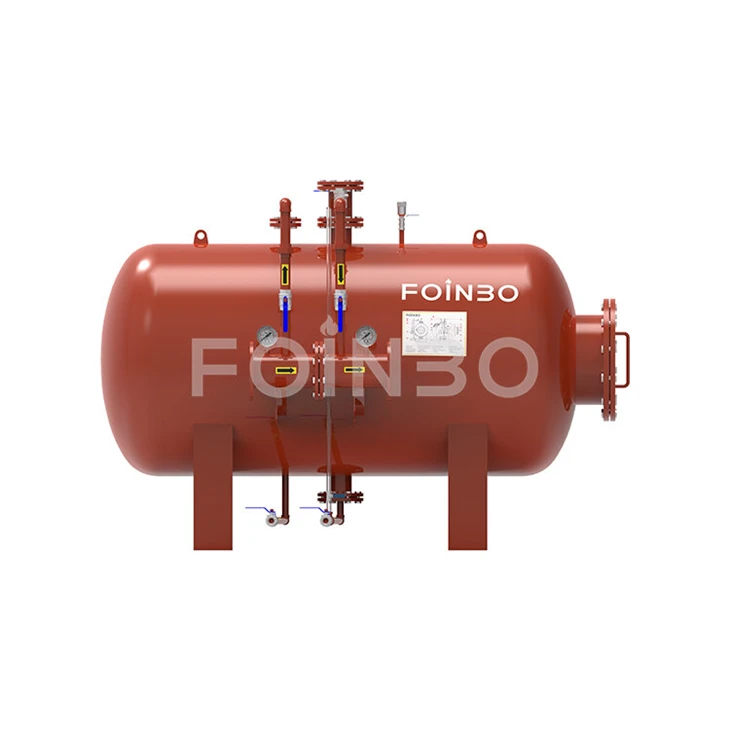
Constructed with marine - grade carbon steel, the Foam Tank In Ship ensures durability in harsh saltwater environments. Its internal bladder, made from corrosion - resistant rubber or PVC, acts as a barrier to safeguard foam concentrate from seawater contamination and mechanical stress. This design preserves the concentrate's chemical stability, ensuring reliable fire - smothering performance during emergencies at sea.
At the core of the system, an SS304 stainless - steel proportioner enables precise foam - to - water mixing, with adjustable 3% or 6% concentration ratios. This adaptability allows crew members to tailor foam output to diverse maritime fire scenarios-from engine room spills to cargo hold blazes. Complementary components, including ball valves, safety valves, and piping (all optimized for marine use), ensure seamless flow control and pressure management in rolling or pitching conditions.
The Foam Tank In Ship is available in capacities ranging from compact models for small vessels to large - scale units for offshore rigs. Operating within a 0.8–1.2 Mpa pressure range, it delivers flow rates suited to marine fire - fighting demands. A specialized anti - corrosion paint finish, combined with galvanized fittings, extends service life in saltwater and humid environments.
Products Parameters
|
Model |
Capacity |
Description |
Working pressure |
Ratio |
Flow Rate Range |
|
PHYM-1000 |
1000 L |
Horizontal |
0.8-1.2 Mpa |
3% or 6% |
8-32 LPS |
|
PHYM-1500 |
1500 L |
Horizontal |
0.8-1.2 Mpa |
3% or 6% |
8-32 LPS |
|
PHYM-2000 |
2000 L |
Horizontal |
0.8-1.2 Mpa |
3% or 6% |
8-32 LPS |
|
PHYM-2500 |
2500 L |
Horizontal |
0.8-1.2 Mpa |
3% or 6% |
8-32 LPS |
|
PHYM-3000 |
3000 L |
Horizontal |
0.8-1.2 Mpa |
3% or 6% |
12-48 LPS |
|
PHYM-3500 |
3500 L |
Horizontal |
0.8-1.2 Mpa |
3% or 6% |
12-48 LPS |
|
PHYM-4000 |
4000 L |
Horizontal |
0.8-1.2 Mpa |
3% or 6% |
12-48 LPS |
|
PHYM-4500 |
4500 L |
Horizontal |
0.8-1.2 Mpa |
3% or 6% |
12-48 LPS |
|
PHYM-5000 |
5000 L |
Horizontal |
0.8-1.2 Mpa |
3% or 6% |
12-48 LPS |
|
PHYM-5500 |
5500 L |
Horizontal |
0.8-1.2 Mpa |
3% or 6% |
12-48 LPS |
|
PHYM-6000 |
6000 L |
Horizontal |
0.8-1.2 Mpa |
3% or 6% |
16-64 LPS |
|
PHYM-7000 |
7000 L |
Horizontal |
0.8-1.2 Mpa |
3% or 6% |
16-64 LPS |
|
PHYM-8000 |
8000 L |
Horizontal |
0.8-1.2 Mpa |
3% or 6% |
16-64 LPS |
Products Features
| Body Material |
Carbon Steel; |
| Bladder Material |
Rubber / PVC |
| Proportioner |
SS304 Stainless Steel; |
| Ball Valve |
Carbon Steel is standard,SS304 Stainless Steel optional; |
| Safety Valve |
Carbon Steel is standard,SS304 Stainless Steel optional ; |
| Piping System |
Carbon Steel is standard,SS304 Stainless Steel optional ; |
|
Flange Standard of Proportioner |
ANSI / BS4504 / GB; |
| Surface Finishing | Painting |
Products Description


FAQ
Q: How to prevent foam tank damage during rough seas?
A: Secure the tank with marine - rated shock - absorbing mounts and reinforced brackets. Use flexible piping connections to accommodate vessel movement, preventing stress - induced leaks or component failures.
Q: Can the Foam Tank In Ship use seawater for foam mixing?
A: Yes, but seawater must be filtered to remove debris and salt - induced contaminants. The proportioner and bladder are designed to handle seawater, but regular system flushing is required to prevent corrosion.
Q: What's the protocol for inspecting the Foam Tank In Ship after a major storm?
A: Conduct a post - storm inspection of mounts, piping, and the bladder for damage or displacement. Test pressure valves and the proportioner to ensure functionality, and verify concentrate levels for leaks.
Q: How to integrate the tank with a Foam Tank In Ship's existing fire - alarm system?
A: Connect the tank to the ship's fire - alarm network via marine - certified control panels. Program automatic activation triggers (e.g., smoke detector signals) to ensure rapid foam deployment during emergencies.
Q: What maintenance is unique to marine foam tanks?
A: Perform regular saltwater flushes to prevent corrosion, inspect bladders for salt - induced degradation, and test components for marine - environment wear. Replace sacrificial anodes (if installed) to protect against electrolysis.