

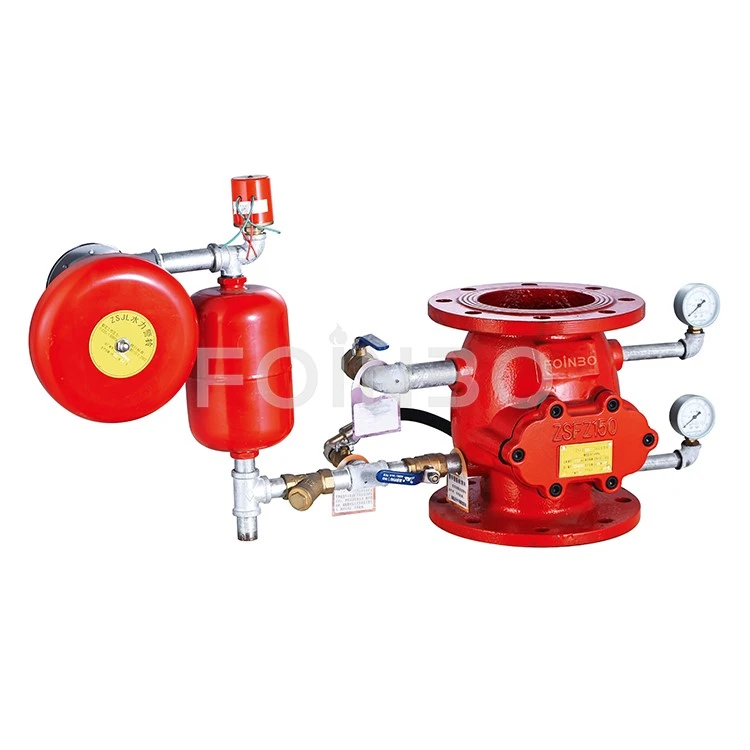
Difference Between Alarm Check Valve and Deluge valve
Fire protection systems rely on specialized valves to control water flow, detect emergencies, and suppress fires effectively. Two critical components-alarm check valves (ACVs) and deluge valves-serve distinct purposes despite both being integral to fire safety. This guide explores their differences in design, function, applications, and compliance to help engineers and facility managers select the right valve for their needs.
Alarm Check Valve (ACV)
An alarm check valve is primarily used in wet pipe sprinkler systems, where pipes remain filled with pressurized water. Its dual role includes:
- Preventing backflow: Ensuring water flows only toward sprinklers, protecting municipal supplies from contamination.
- Triggering alarms: Detecting water movement when a sprinkler activates, sending a signal to fire alarm panels or sounding mechanical alarms (e.g., water motor gongs).
ACVs are passive devices that respond to pressure changes caused by sprinkler discharge, making them ideal for buildings requiring rapid, localized fire response (e.g., offices, schools).
Deluge Valve
A deluge valve is the cornerstone of deluge systems, where pipes remain dry until an emergency occurs. Its key functions are:
- Simultaneous water discharge: Opening fully to flood all sprinkler heads in a zone when triggered by a fire detection system (e.g., smoke/heat sensors).
- High-volume suppression: Designed for rapid fire control in high-hazard areas (e.g., chemical plants, aircraft hangars).
Deluge valves are active devices that rely on external signals (electrical or pneumatic) to activate, ensuring water is released only when a threat is confirmed.
Alarm Check Valve
- Structure: Comprises a valve body with a clapper (hinged disc), alarm port, and retard chamber.
- Operation:
- Under normal conditions, the clapper remains closed, maintaining system pressure.
- When a sprinkler activates, water flows from the supply side to the system side, lifting the clapper.
- Water enters the alarm port, pressurizing the alarm line to trigger audible/visual alerts.
- The retard chamber delays alarm activation by 5–90 seconds to prevent false alarms from pressure surges.
Deluge Valve
- Structure: Includes a valve body, diaphragm, pressure chamber, and external control mechanism (e.g., solenoid valve, pneumatic actuator).
- Operation:
- In standby mode, the diaphragm is held closed by water pressure in the control chamber.
- When a fire is detected, the control system releases pressure from the chamber (e.g., via solenoid valve activation).
- The diaphragm lifts, allowing water to flow into the piping network and out of all open sprinkler heads simultaneously.
| Feature | Alarm Check Valve | Deluge Valve |
|---|---|---|
| System Type | Wet pipe (water-filled pipes) | Deluge (dry pipes until activation) |
| Activation Method | Passive (pressure change from sprinkler) | Active (external signal from detection system) |
| Water Discharge | Localized (only activated sprinklers) | Global (all sprinklers in zone) |
| Alarm Function | Integrated (triggers alarms on flow detection) | No built-in alarm; relies on separate detectors |
| Response Time | Immediate (clapper opens instantly) | Delayed (depends on detection system speed) |
| Typical Applications | Low-to-medium hazard (offices, hotels) | High hazard (power plants, warehouses) |
-
Alarm Check Valve
- Common Uses:
- Standard wet pipe sprinkler systems in commercial buildings.
- Retrofitting older systems where backflow prevention and alarming are required.
Deluge Valve
- Common Uses:
- Protecting areas with flammable liquids, chemicals, or rapid-fire spread risks.
- Special hazards like aircraft hangars, tunnel ventilation systems, and transformer rooms.