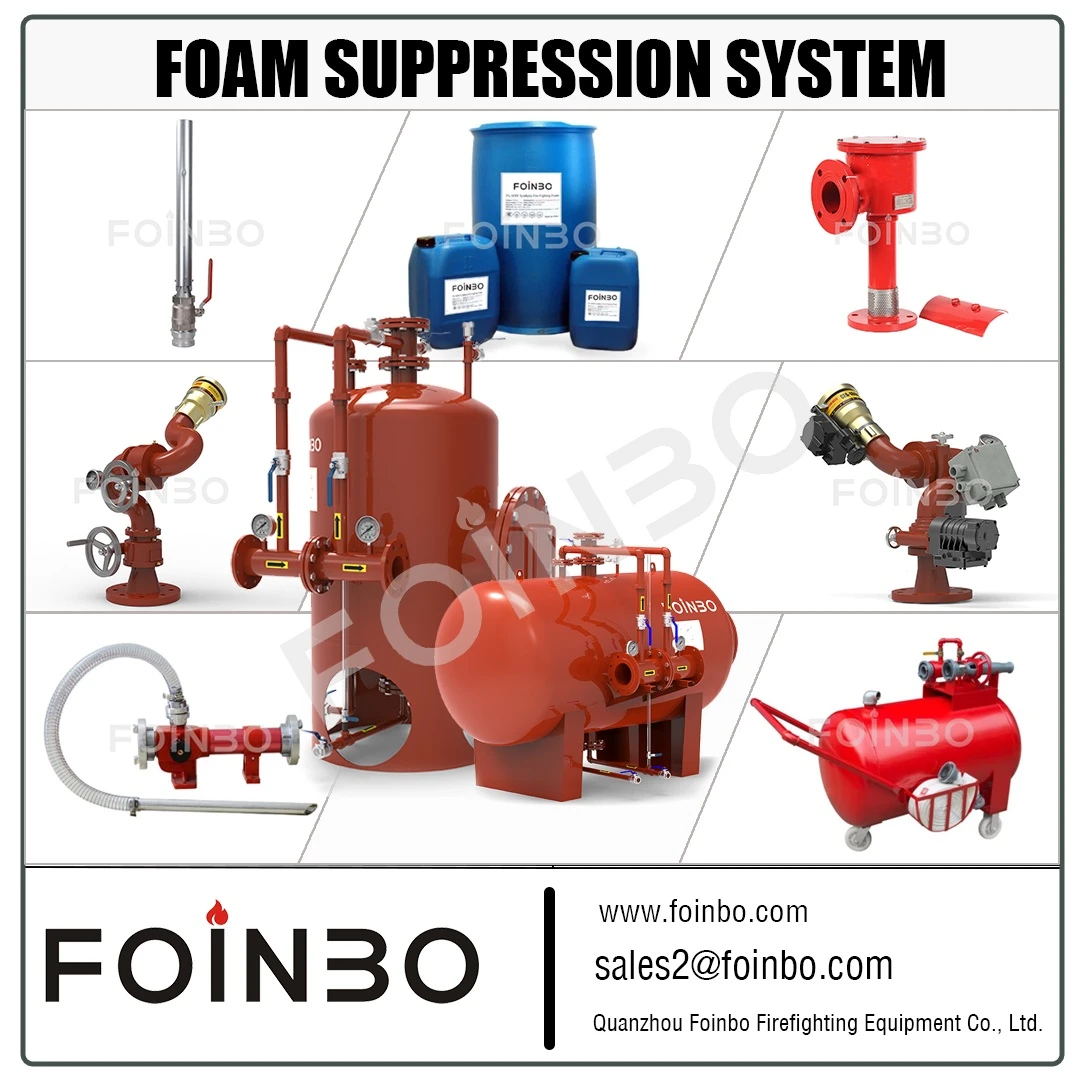
What is a Inline Foam Inductor?
foinbo Inline Foam Inductor is a key component of foam fire suppression systems, designed for continuous, precise mixing of fire water and foam concentrate. Based on the venturi effect, it features a compact inline design that integrates seamlessly into fire pipelines, saving space and simplifying installation. Made of high-quality aluminum alloy and copper, it offers excellent durability, withstanding harsh environments and foam erosion. Its core advantages include stable, adjustable proportion mixing, wide flow range, versatility (compatible with various foam types), and low maintenance. Widely used in industrial facilities, oil storage areas, commercial buildings, and marine vessels, it suppresses Class A and B fires effectively. Operating through a fully mechanical process without electrical components, it ensures high reliability in emergencies. Cost-effective and easy to integrate, it provides a reliable solution to enhance fire suppression efficiency, protecting personnel and property safely.
General Description
foinbo Inline Foam Inductor is a critical component of foam fire suppression systems, designed to continuously and precisely mix fire-fighting water with foam concentrate in adjustable ratios (1%, 3%, 6%) for effective fire extinguishment. Based on the venturi effect and fluid dynamics, it integrates seamlessly into fire water pipelines with a compact inline design, eliminating the need for large mixing tanks and saving installation space. Crafted with high-quality aluminum alloy and copper, it boasts excellent durability, withstanding foam concentrate erosion, water pressure fluctuations, and harsh environmental conditions. Its core advantages include precise proportion mixing (stable performance even with pressure fluctuations), easy installation and space-saving design, wide flow range and versatile adaptability (compatible with various foam types and water pressure), and low maintenance requirements. Widely applicable to industrial facilities, oil and gas storage areas, commercial buildings, warehouses, marine vessels, and public places, it effectively suppresses Class A and B fires. The working principle involves water pressure build-up, venturi effect-induced negative pressure, foam concentrate suction, proportion mixing, and mixture output-all mechanical, ensuring high reliability without electrical components. Choosing this inductor ensures cost-effectiveness, stable performance, and seamless integration with existing fire systems, providing a reliable foam mixing solution to enhance fire suppression efficiency and protect personnel and property.
Components of Foinbo Inline foam inductor
First, Precise Proportion Mixing and Stable Performance The foinbo Inline Foam Inductor is equipped with a precision mixing mechanism, featuring a venturi tube and adjustable proportion valve that ensure the foam concentrate and fire water are mixed in a consistent, accurate ratio (usually 1%, 3%, or 6%, adjustable according to needs). Unlike traditional mixing devices that may produce uneven mixtures due to water pressure fluctuations, this inline inductor maintains stable mixing performance even when the fire water flow rate or pressure changes within a reasonable range. The precision design eliminates the risk of insufficient or excessive foam concentrate, which can reduce extinguishing efficiency or cause unnecessary waste. This stable and precise mixing ensures that the foam mixture has optimal viscosity, adhesion, and extinguishing capacity, effectively smothering flammable liquid fires and preventing re-ignition, making it highly reliable for critical fire suppression scenarios.
Second, Space-Saving Inline Design and Easy Installation The foinbo Inline Foam Inductor adopts a compact inline design, which allows it to be directly installed into existing fire water pipelines without the need for additional mixing tanks, pumps, or large installation spaces. This design significantly simplifies the overall structure of the foam fire suppression system, reducing installation costs and construction time. Compared with tank-type or batch mixing devices, the inline design eliminates complex pipeline connections and tank maintenance, making on-site installation quick and convenient. It is compatible with standard fire water pipeline specifications, ensuring seamless integration with existing systems, whether in new construction projects or retrofits of old fire systems. The compact size also makes it suitable for installation in narrow spaces, such as industrial plant corners, basement fire rooms, or on ships.
Third, Corrosion-Resistant and Durable Construction The foinbo Inline Foam Inductor is constructed with high-quality aluminum alloy and copper, which are specially treated to resist erosion from foam concentrates, fire water, and environmental pollutants. Foam concentrates, especially synthetic and protein-based ones, can be corrosive to ordinary metals over time, but the inductor's aluminum alloy and copper construction ensures long-term stable operation without rust, deformation, or leakage. Aluminum alloy provides excellent lightweight performance and structural strength, making the inductor easy to install and handle, while copper offers superior corrosion resistance and sealing performance, which is critical for the internal components that come into direct contact with foam concentrate and water. The internal components, such as the venturi tube and proportion valve, are precision-machined and wear-resistant, capable of withstanding continuous high-pressure water flow and foam concentrate circulation. This durable construction reduces the frequency of replacement and maintenance, and brings long-term economic benefits to users.
Fourth, Wide Flow Range and Versatile Adaptability The foinbo Inline Foam Inductor is designed with a wide flow range, capable of adapting to different fire water flow rates, from small-scale local fires to large-area industrial fires. It can be customized to match various foam concentrate types, including protein foam, fluoroprotein foam, synthetic foam, and aqueous film-forming foam (AFFF), making it suitable for diverse fire suppression needs. The adjustable proportion settings allow users to switch between different mixing ratios according to the fire type and foam concentrate specifications, enhancing its versatility. Additionally, it is compatible with both low-pressure and medium-pressure fire water systems, adapting to different water supply pressure requirements (usually 0.2-1.0 Mpa), which makes it widely applicable to various industrial, commercial, and marine scenarios.
Inline foam inductor Working Principle
The working principle of the foinbo Inline Foam Inductor is based on the venturi effect and fluid dynamics, enabling continuous, precise mixing of foam concentrate and fire water through a simple yet efficient mechanical process, which can be divided into five key stages: water inlet and pressure build-up, venturi effect and negative pressure generation, foam concentrate suction, proportion mixing, and mixture output. Each stage is closely linked to ensure stable, accurate mixing performance, and the entire process operates without electrical components, relying solely on the pressure of the fire water flow. In the first stage-water inlet and pressure build-up-the inline foam inductor is installed in the fire water pipeline, with one end connected to the fire water supply (municipal pipeline or fire pump) and the other end connected to the fire suppression equipment (sprinklers, fire water cannons, or fire hoses). When a fire occurs and the fire suppression system is activated, high-pressure fire water flows into the inductor through the water inlet. The internal structure of the inductor, crafted from aluminum alloy and copper, is designed to gradually narrow the flow channel, which increases the water flow velocity and builds up pressure as the water moves through the device. This pressure build-up is critical for generating the negative pressure needed to suck in foam concentrate. The second stage involves the venturi effect and negative pressure generation, which is the core of the inductor's working principle. The inductor is equipped with a precision-engineered venturi tube-a narrow, tapered section in the internal flow channel made of copper for enhanced corrosion resistance. As the high-pressure water flows through the narrowest part of the venturi tube, its velocity increases significantly while its pressure decreases sharply, creating a negative pressure zone (lower than atmospheric pressure) at the throat of the venturi tube. This negative pressure is the driving force for sucking foam concentrate into the mixing chamber. The third stage is foam concentrate suction: the foinbo Inline Foam Inductor is equipped with a foam concentrate suction port, made of copper to prevent corrosion, which is connected to a foam concentrate storage tank or container via a suction hose. When negative pressure is generated at the venturi throat, atmospheric pressure pushes the foam concentrate from the storage tank through the suction hose and into the inductor's mixing chamber. The suction port is equipped with a check valve to prevent backflow of water into the foam concentrate storage tank, ensuring the purity of the foam concentrate and avoiding contamination. The fourth stage is proportion mixing, which ensures that the foam concentrate and fire water are mixed in the desired ratio. The inductor is equipped with an adjustable proportion valve, which can be set to different ratios (1%, 3%, or 6%) according to the type of foam concentrate and fire suppression requirements. This valve, made of precision-machined copper, controls the amount of foam concentrate sucked into the mixing chamber by adjusting the size of the suction channel. As the high-velocity water flows through the mixing chamber (aluminum alloy housing), it creates a turbulent flow that thoroughly mixes the foam concentrate with the water, breaking down the foam concentrate into small droplets and integrating it evenly into the water flow. The internal mixing chamber is designed with baffles to enhance turbulence and ensure complete mixing, eliminating uneven mixtures that may reduce extinguishing efficiency. The fifth and final stage is mixture output: the fully mixed foam-water mixture flows out of the inductor through the outlet and into the fire suppression equipment (sprinklers, fire water cannons, etc.), which then delivers the mixture to the fire source. The mixture maintains a consistent proportion throughout the entire flow process, even if the water flow rate or pressure fluctuates slightly within a reasonable range. After the fire is extinguished and the fire water supply is stopped, the negative pressure in the venturi tube disappears, and the check valve closes automatically, preventing any remaining water in the inductor from flowing back into the foam concentrate storage tank. The entire working process is fully mechanical, relying solely on the pressure of the fire water flow, without any electrical components, which ensures reliable performance in harsh environments (such as dust, humidity, or high temperature) and avoids the risk of electrical failure. The precision design of the venturi tube, proportion valve, and mixing chamber ensures that the inductor operates efficiently, with accurate mixing ratios and stable performance, making it a core component of foam fire suppression systems.
Where to use Inline Foam Inductor?
foinbo Inline Foam Inductor is widely applicable to various scenarios that require foam fire suppression, especially those involving flammable liquids or large-scale solid combustibles, including industrial facilities, oil and gas storage areas, commercial buildings, warehouses, marine vessels, and public places. In industrial facilities such as chemical plants, refineries, and paint factories, where large quantities of flammable liquids (such as gasoline, diesel, chemicals, and solvents) are stored or processed, the inline foam inductor is installed in the fire water pipeline network to provide continuous, stable foam-water mixture for rapid fire suppression. Its corrosion-resistant construction can withstand the harsh industrial environment, and its precise mixing performance ensures effective extinguishing of Class B fires. In oil and gas storage areas, including oil depots, gas stations, and tank farms, the inductor is a critical component, as it can quickly mix foam concentrate with fire water to form a dense foam layer that smothers flammable liquid fires, preventing fire spread and explosion risks. In commercial buildings such as shopping malls, hotels, and airports, which have large spaces and dense personnel, the inline foam inductor is installed in the central fire water system, paired with sprinklers or fire water cannons to provide foam suppression for fires involving flammable materials (such as furniture, textiles, and cosmetics). In large warehouses storing combustible goods (such as paper, wood, and packaged flammables), the inductor's wide flow range and continuous mixing capability ensure that the entire warehouse area is covered with optimal foam mixture. On marine vessels, including cargo ships, tankers, and cruise ships, the compact inline design saves space, and its corrosion-resistant construction adapts to the marine environment, providing reliable foam suppression for fires on board (such as engine room fires or cargo hold fires). Additionally, it is also used in public places such as stadiums, hospitals, and schools, where foam suppression is needed to protect large crowds and critical facilities.