

Simulating the behavior of a foam inductor in a circuit is a crucial aspect for engineers and researchers involved in fire protection systems and fluid dynamics applications. As a foam inductor supplier, we understand the significance of accurate simulation to optimize the performance of these devices. In this blog, we will explore the steps and techniques to simulate the behavior of a foam inductor in a circuit effectively.
Understanding the Foam Inductor
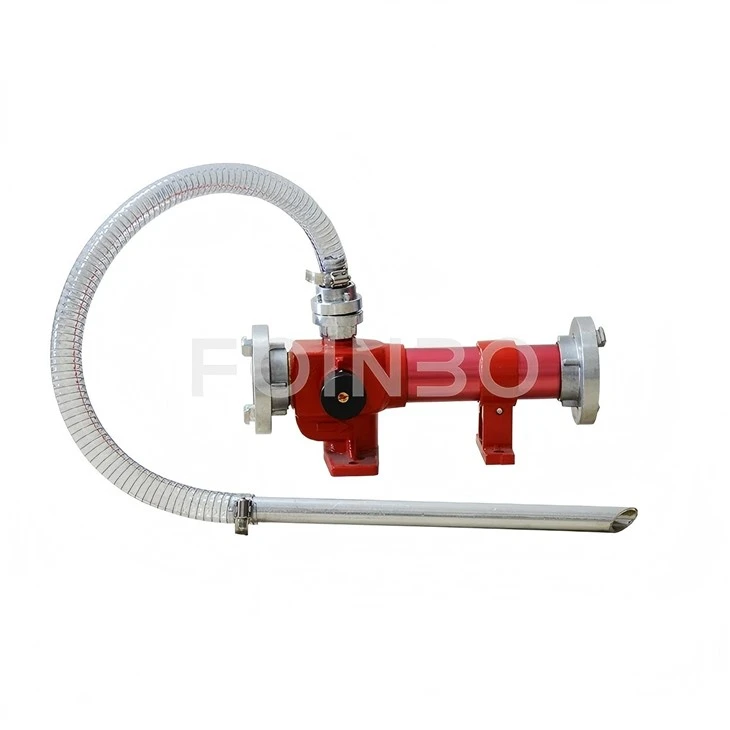
Before diving into the simulation process, it is essential to have a clear understanding of what a foam inductor is and how it works. A foam inductor is a device used in fire protection systems to introduce foam concentrate into a water stream to create a foam solution. There are different types of foam inductors available, such as Portable Foam Inductor and Inline Foam Inductor. Each type has its unique design and operating principles.
The basic principle of a foam inductor involves the Venturi effect. When water flows through a constricted section of the inductor, the velocity of the water increases, and the pressure decreases. This pressure drop creates a suction force that draws the foam concentrate into the water stream. The mixture of water and foam concentrate then forms a foam solution that can be used to extinguish fires.
Modeling the Foam Inductor in a Circuit
To simulate the behavior of a foam inductor in a circuit, we need to create a mathematical model that represents the physical processes involved. This model should take into account factors such as fluid flow, pressure drop, and the mixing of the water and foam concentrate.
Fluid Flow Modeling
The first step in modeling the foam inductor is to simulate the fluid flow through the device. This can be done using computational fluid dynamics (CFD) software. CFD software uses numerical methods to solve the Navier - Stokes equations, which describe the motion of fluid.
In the case of a foam inductor, we need to define the geometry of the inductor, including the inlet, outlet, and the constricted section. We also need to specify the properties of the fluid, such as density and viscosity. The boundary conditions, such as the inlet velocity and pressure, need to be set accurately to represent the real - world operating conditions.
Once the geometry, fluid properties, and boundary conditions are defined, the CFD software will solve the equations to calculate the velocity and pressure distribution inside the inductor. This information is crucial for understanding how the water flows through the device and how the pressure drop is created.
Pressure Drop Calculation
The pressure drop across the foam inductor is an important parameter that affects its performance. A proper pressure drop is required to ensure that the foam concentrate is drawn into the water stream effectively.
We can calculate the pressure drop using the Bernoulli's equation, which relates the pressure, velocity, and elevation of a fluid in a streamline. The Bernoulli's equation for an incompressible fluid is given by:
$P_1+\frac{1}{2}\rho v_1^2+\rho gh_1 = P_2+\frac{1}{2}\rho v_2^2+\rho gh_2$
where $P_1$ and $P_2$ are the pressures at two points in the fluid, $\rho$ is the density of the fluid, $v_1$ and $v_2$ are the velocities at the two points, $g$ is the acceleration due to gravity, and $h_1$ and $h_2$ are the elevations at the two points.
In the case of a foam inductor, we can use the Bernoulli's equation to calculate the pressure drop between the inlet and the constricted section. The pressure drop can also be verified using experimental data or empirical correlations.
Mixing of Water and Foam Concentrate
Another important aspect of the simulation is to model the mixing of the water and foam concentrate. This can be done by tracking the concentration of the foam concentrate in the water stream.

We can use a species transport model in the CFD software to simulate the mixing process. The species transport model solves the convection - diffusion equation, which describes the transport of a species (in this case, the foam concentrate) in a fluid.
The convection - diffusion equation is given by:
$\frac{\partial(\rho\phi)}{\partial t}+\nabla\cdot(\rho\mathbf{v}\phi)=\nabla\cdot(\Gamma\nabla\phi)+S$
where $\rho$ is the density of the fluid, $\phi$ is the mass fraction of the species, $\mathbf{v}$ is the velocity vector of the fluid, $\Gamma$ is the diffusion coefficient, and $S$ is the source term.
By solving this equation, we can determine how the foam concentrate is distributed in the water stream and how well it is mixed.
Validating the Simulation Results
Once we have created the model and run the simulation, we need to validate the results against experimental data. This is an important step to ensure that the simulation is accurate and reliable.
We can compare the simulated pressure drop, flow rate, and foam concentrate concentration with the experimental data. If there are significant differences between the simulation and the experimental results, we need to review the model and make adjustments.
The experimental data can be obtained from laboratory tests. We can use a test rig to measure the pressure drop, flow rate, and foam concentrate concentration at different operating conditions. By comparing the experimental data with the simulation results, we can fine - tune the model and improve its accuracy.
Applications of Foam Inductor Simulation
The simulation of foam inductors in circuits has several practical applications.
Fire Protection System Design
In the design of fire protection systems, accurate simulation of foam inductors can help engineers optimize the system performance. By simulating different designs and operating conditions, engineers can determine the most effective configuration of the foam inductor to ensure that the foam solution is generated efficiently and can reach the fire source effectively.
Product Development
For foam inductor suppliers, simulation is an important tool for product development. By simulating the behavior of new inductor designs, we can predict their performance and make improvements before manufacturing the actual products. This can save time and cost in the development process.
Troubleshooting and Maintenance
Simulation can also be used for troubleshooting and maintenance of existing foam inductor systems. If there are problems with the performance of the system, such as low foam quality or insufficient flow rate, we can use simulation to identify the possible causes and find solutions.
Contact for Procurement and Consultation
If you are interested in our foam inductors or need more information about simulating their behavior in circuits, we are here to help. Our team of experts has extensive experience in the design and simulation of foam inductors. We can provide you with detailed technical support and guidance to meet your specific needs. Whether you are involved in fire protection system design, product development, or troubleshooting, we can offer the right solutions. Feel free to reach out to us for procurement and to start a productive discussion about your requirements.
References
- White, F. M. (2006). Fluid Mechanics. McGraw - Hill.
- Versteeg, H. K., & Malalasekera, W. (2007). An Introduction to Computational Fluid Dynamics: The Finite Volume Method. Pearson Education.
- Incropera, F. P., & DeWitt, D. P. (2002). Fundamentals of Heat and Mass Transfer. Wiley.