

Hey there! As a supplier of OSY (Outside Screw and Yoke) gate valves, I've had my fair share of experiences with these valves. They're pretty popular in various industries for controlling the flow of liquids and gases. But like anything in life, they've got their drawbacks. So, let's dive into what those disadvantages are.
1. Slow Operation
One of the major cons of an OSY gate valve is its slow operation. You see, to fully open or close this valve, you've got to turn the handwheel multiple times. This is because the gate inside the valve moves linearly, and it takes a good number of rotations to cover the required distance. In situations where you need to quickly shut off the flow, like in an emergency, this slow operation can be a real pain. For example, if there's a sudden leak in a pipeline, you'd want to stop the flow right away. But with an OSY gate valve, you'll have to spend precious seconds or even minutes turning that handwheel.

2. Limited Throttling Capability
OSY gate valves aren't great for throttling. Throttling means adjusting the flow rate to a specific level. These valves are designed to be either fully open or fully closed. When you try to use them for throttling, the gate inside the valve is only partially open. This causes the fluid to flow through a narrow opening at high velocity. The high - velocity flow can cause erosion of the valve seat and the gate itself. Over time, this erosion can lead to leaks and a decrease in the valve's lifespan. So, if you need to control the flow rate precisely, an OSY gate valve might not be the best choice. You might want to consider other types of valves like globe valves which are better suited for throttling.
3. High Installation and Maintenance Costs
Installing an OSY gate valve can be quite expensive. First of all, these valves are usually larger and heavier compared to some other types of valves. This means you need more support and a bigger installation space. The installation process also requires more labor and time, which adds to the cost.
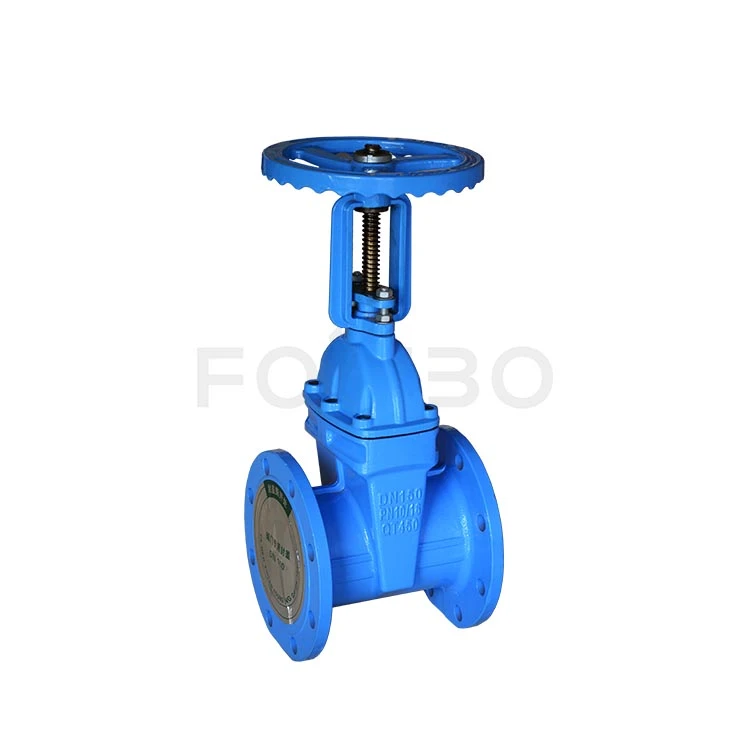
Maintenance is another area where the costs can pile up. The OSY design has an exposed stem and yoke. This exposed part is more prone to corrosion, especially in harsh environments. You need to regularly lubricate the stem to ensure smooth operation. Also, the valve seat and the gate need to be inspected and replaced periodically. All these maintenance tasks require specialized tools and trained personnel, which again increases the overall cost. If you're on a tight budget, you might find these costs a bit overwhelming.
4. Susceptible to Water Hammer
Water hammer is a phenomenon that occurs when there's a sudden change in the flow velocity of a fluid in a pipeline. When an OSY gate valve is closed suddenly, the fluid flow stops abruptly. This sudden stop causes a pressure wave to travel through the pipeline. The pressure wave can cause damage to the pipeline, the valve, and other components in the system. The shockwaves can lead to leaks, pipe bursts, and even structural damage. To prevent water hammer, you need to install additional equipment like surge suppressors, which adds to the cost and complexity of the system.
5. Difficult to Operate in High - Pressure Systems
In high - pressure systems, operating an OSY gate valve can be extremely difficult. The high pressure puts a lot of force on the gate and the stem. When you try to open or close the valve, you need to overcome this force. This means you'll have to use a lot of physical effort to turn the handwheel. In some cases, the force required might be so high that it's almost impossible to operate the valve manually. You might need to use power - assisted actuators, which again increase the cost and complexity of the system.
6. Sealing Issues
The sealing mechanism in an OSY gate valve can sometimes be a problem. The valve relies on the tight contact between the gate and the valve seat to prevent leaks. However, over time, the seat and the gate can wear out due to erosion, corrosion, or normal use. This can lead to leaks. Even a small leak can be a big problem, especially in systems where the fluid is hazardous or expensive.
Solutions and Alternatives
Now, just because OSY gate valves have these disadvantages doesn't mean they're completely useless. There are ways to mitigate these issues. For example, if you're worried about slow operation, you can install an actuator on the valve. An actuator can open or close the valve quickly with the push of a button.
If you need throttling, you can use a combination of an OSY gate valve and a throttling valve. The OSY gate valve can be used as a shut - off valve, and the throttling valve can be used to control the flow rate.
When it comes to high installation and maintenance costs, you can choose high - quality valves that are more durable and require less maintenance. For example, you can check out our Ductile Gate Valve. Ductile iron construction makes it more resistant to corrosion and wear.
To prevent water hammer, you can install a slow - closing actuator on the valve. This will gradually close the valve, reducing the chances of a sudden pressure wave.
Conclusion
In conclusion, while OSY gate valves have their place in many industries, they do come with a set of disadvantages. Slow operation, limited throttling capability, high costs, susceptibility to water hammer, difficulty in high - pressure systems, and sealing issues are some of the main drawbacks. But with the right solutions and alternatives, you can still use these valves effectively.
If you're in the market for OSY gate valves or want to discuss your specific requirements, we'd love to hear from you. Whether you need a Gate Valve 3 Inch or a Flanged Osy Gate Valve, we've got you covered. Feel free to reach out to us for a quote and to start a discussion about your valve needs.
References
- Valve Handbook: A Guide to Valve Selection, Installation, and Maintenance.
- Fluid Mechanics and Hydraulics Textbooks.
- Industry reports on valve performance and reliability.